Writing · Gaming
AI NPCs in Games: The Hype, and What's Actually Shipping
Every studio demo shows a shopkeeper who can talk about anything. Very few shipped games let them. There are good reasons.

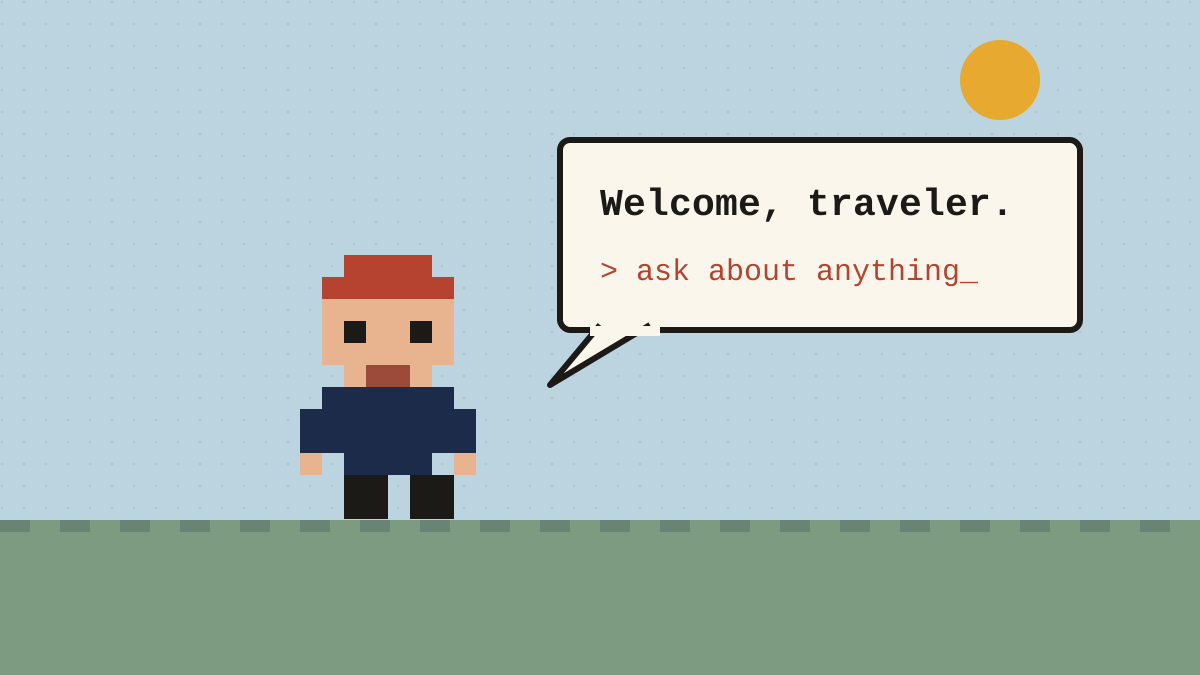
The demo is always the same. A player walks up to a non-player character, a shopkeeper, a guard, a tavern regular, and instead of picking from three dialogue options, they just talk. The NPC answers in character, with a voice, and remembers what you said. The crowd applauds.
Then the game ships and the shopkeeper still says "Welcome, traveler" from a list of six lines.
What's going on?
The problems nobody puts in the demo
Cost per player. Running a language model for every conversation in a game that millions of people play is expensive. Studios used to pay once to write dialogue; AI dialogue costs money every time someone talks. That changes the economics of a game completely.
Latency. In a game, a two-second pause before an answer feels broken. Hitting that budget consistently, worldwide, is hard.
Breaking the game. A free-talking NPC can be convinced to give away quest solutions, contradict the plot, or wander into content that gets a game re-rated. Designers need NPCs that are free in tone but constrained in facts.
Writing quality. Generic AI dialogue tends to sound like generic AI dialogue. Players notice. Game writers have spent years crafting distinct voices; replacing them with something blander is a downgrade, not an upgrade.
What's actually working
The approaches I've seen succeed in shipped and near-shipped games are more modest and more clever:
- AI as flavor, not plot. Ambient chatter, reactions to what the player is wearing or just did, barks in combat. Low stakes, high immersion.
- Small local models. Running a compact model on the player's device solves cost and latency for simple interactions.
- Writer-authored constraints. Each character gets a carefully written profile, a list of things they know and don't know, and lines they must never cross. The AI improvises inside a box the writer built.
- Companion characters. A single follower who comments on your journey and remembers your choices delivers most of the magic with a fraction of the risk.
My take
AI NPCs are coming, but they'll arrive as a thousand small improvements rather than one revolutionary talking shopkeeper. The games that get it right will be the ones that treat AI as a tool for writers, not a replacement for them. Watch for small studios here; they have less to lose and more reason to experiment.
— Marc
American tech writer covering AI tool comparisons and AI entertainment. Disagree, or tested something I haven't? Tell me.